

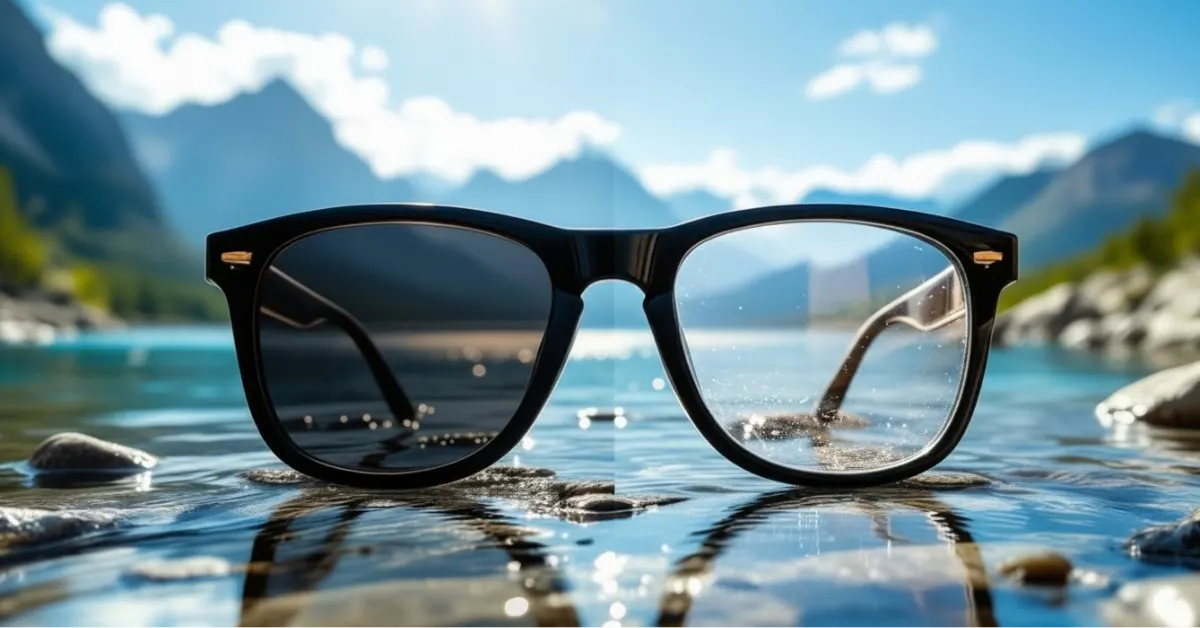
Tinted vs polarized sunglasses differ in how they manage sunlight. Tinted lenses use pigmented dyes to absorb overall visible light and dim brightness across your entire visual field. Polarized lenses incorporate a chemical polyvinyl alcohol filter that blocks horizontal light waves, eliminating blinding glare from flat surfaces like asphalt, water, and car hoods.
Walking outdoors on a blinding summer afternoon forces an immediate choice between basic shade and visual precision. Most buyers assume that dark glass automatically means superior performance. That assumption costs money and causes eye fatigue.
Selecting the right eyewear requires understanding the mechanical difference between light absorption and glare filtration. Whether you drive daily, fish on weekends, or walk city streets, picking the wrong lens leaves you squinting through dangerous surface reflections or struggling to read modern digital devices.
What Polarized Sunglasses Actually Do to Light
Polarized sunglasses contain an embedded chemical filter oriented vertically to absorb horizontally vibrating light waves. When raw sunlight strikes a horizontal surface like wet asphalt, snow, or water, it concentrates into intense horizontal glare. Polarized lenses block this reflective light to reveal sharp contrast and true color.
Direct sunlight travels in multidirectional waves, bouncing across the atmosphere in chaotic angles. The moment those light rays strike a flat, reflective boundary, their orientation reorganizes into a concentrated horizontal alignment.
This horizontal concentration is visual glare. It causes involuntary squinting, pupil constriction, headaches, and temporary flash blindness. Standard sunglasses fail to stop this phenomenon because a simple colored tint merely darkens the entire visual field without stripping out the horizontal light spike.
Polarized lenses resolve this issue through physical light filtration:
- Microscopic chemical alignment acts like vertical venetian blinds, allowing vertical light rays to reach your eye while neutralizing horizontally reflected glare.
- Surface glare reduction lets fishermen look straight through water surfaces to track structure and fish instead of staring at a blinding mirror reflection.
- Enhanced color saturation stops harsh white light spikes from washing out green foliage, highway signage, and surrounding scenery.
- Sustained ocular comfort prevents eye strain and facial tension during extended hours in open marine or snowy environments.
How Standard Tinted Sunglasses Work for Everyday Wear
Tinted sunglasses rely on colored dyes mixed into polycarbonate, polyamide, or glass lenses to reduce visible light transmission. They darken your surroundings evenly, soften harsh direct sunlight, and provide styling options without altering the angle of light waves passing through to your eyes.
Tinted eyewear remains an everyday staple because light management does not always require polarizing filters. Non-polarized tints soften bright environments by reducing the total volume of photons entering your eye.
When you sit at an outdoor cafe, walk across a downtown business district, or commute between subway stations, harsh surface reflection is rarely your main concern. Your goal is simply to prevent squinting against raw ambient brightness while checking phone screens effortlessly.
Everyday tinted lenses deliver distinct practical benefits:
- Uniform light reduction evenly softens the visual landscape without producing optical rainbow patterns.
- Uncompromised digital display visibility allows effortless reading of smartphone screens, smartwatches, automated bank machines, and vehicle navigation units.
- Broad aesthetic styling accommodates solid tones, dual-shade fashion gradients, and subtle pastel colors for personal fashion.
- Predictable depth perception preserves visual accuracy when running, walking on uneven sidewalks, or stepping off curbs.
The Critical Difference Between Polarization and UV400 Protection
The difference between polarization and UV400 protection is that polarization stops blinding surface glare, while UV400 blocks harmful invisible ultraviolet radiation up to 400 nanometers. Polarization does not protect your retinas from sun damage unless the manufacturer explicitly adds a verified UV-blocking chemical treatment.
Conflating polarization with ultraviolet defense is the most dangerous misunderstanding in eye care. Ultraviolet radiation operates on an invisible wavelength spectrum that damages biological eye tissue, accelerating cataracts, photokeratitis, and macular degeneration.
When you slide on dark sunglasses, your brain naturally tells your pupils to dilate, opening wider to allow more light in. If you wear cheap tinted or polarized lenses lacking certified UV400 protection, that enlarged pupil absorbs massive amounts of unfiltered ultraviolet radiation. In practical terms, cheap dark lenses without UV protection cause far more biological harm than wearing no sunglasses at all. Optical retailers like GKB Optical address this risk by pairing lab-tested UV400 coatings with customized tint densities, ensuring that visual comfort never comes at the expense of retinal safety.
Always verify the technical specifications on the product packaging:
- UV400 certification guarantees that the lens absorbs 99% to 100% of UVA and UVB radiation up to the 400-nanometer mark.
- Polarization tags simply mean a glare filter is present, which operates entirely independently of ultraviolet safety ratings.
- Lens darkness never indicates UV safety, as a crystal-clear lens can carry complete UV400 protection while a pitch-black lens might offer none.
Choosing Tinted vs Polarized Sunglasses for Driving
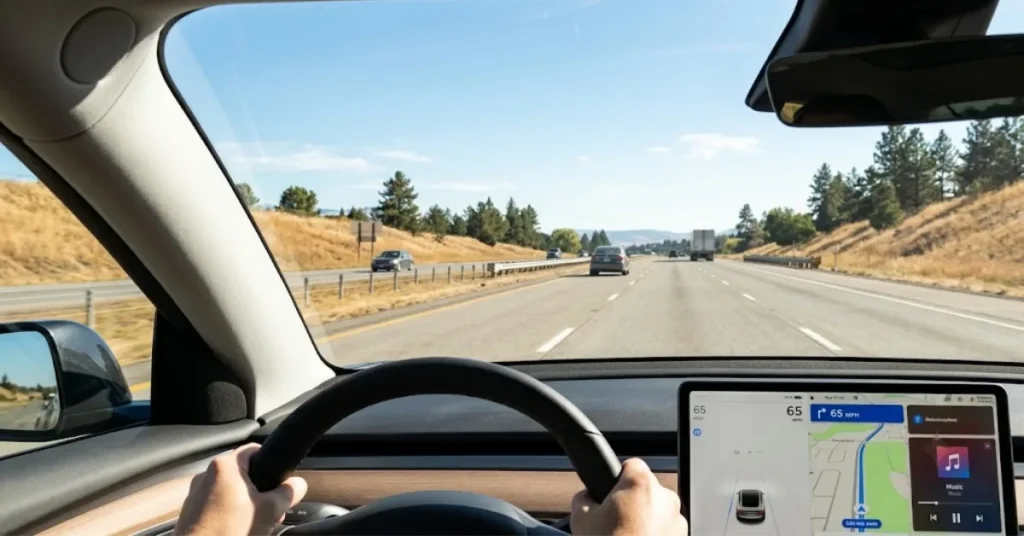
Choosing between tinted vs polarized sunglasses for driving comes down to balancing pavement glare reduction against digital dashboard readability. Polarized lenses eliminate dangerous windshield reflections and wet road glare, but they can obscure modern heads-up displays and LCD dashboard instruments.
Driving presents severe optical demands. Morning and late-afternoon commutes often aim your vehicle straight into low-angle sunlight, producing intense glare off your car hood, chrome trim, and the rear windows of vehicles ahead.
Polarized lenses shine on wet highways after sudden summer storms. Wet asphalt turns into a blinding light mirror under direct sun. A polarized filter strips that white sheen off the road, allowing you to see painted lane markings, standing puddles, and potholes clearly.
However, modern automotive cockpits introduce a technical complication:
- Liquid crystal displays emit polarized light, which can conflict with polarized sunglasses and turn infotainment screens or digital gauge clusters black at specific viewing angles.
- Heads-Up Displays projecting vehicle speed and navigation onto the windshield can vanish completely when viewed through polarized lenses.
- Anti-glare tinted lenses or brown driving tints without polarization keep digital instrument clusters visible while maintaining sharp road contrast.
- Polarized sunglasses must never be used for night driving, because their dark tint drops visible light transmission below legal and safe operational limits.
Why Outdoor Water Sports and Fishing Demand Polarized Lenses
Outdoor water sports and fishing demand polarized lenses because water acts as a reflective surface that bounces light directly into the eyes. Non-polarized tinted lenses only dim this glare, whereas polarized lenses penetrate the water’s surface to reveal submerged hazards, bottom terrain, and moving fish.

Water is the ultimate glare-producing environment. Every wave and ripple creates angled reflective planes that bounce sunlight directly toward your eyes. Spending four hours on a boat with standard tinted glasses results in severe eye exhaustion because your ocular muscles continuously fight raw, scattered glare.
For serious anglers and water enthusiasts, polarized lenses are an essential operational tool:
- Sight fishing requires polarized optics to cut through surface reflections, letting you spot bass, bonefish, or redfish swimming below the waterline.
- Marine safety improves because skippers can spot shallow sandbars, submerged coral heads, and floating debris before hitting them.
- Deep offshore waters demand gray or blue-mirror polarized lenses to combat bright, open-horizon sun exposure.
- Inland streams and muddy rivers benefit from amber, copper, or green-mirror polarized lenses that amplify contrast in shadow-heavy banks.
When Standard Tinted Lenses Outperform Polarized Lenses
Standard tinted lenses outperform polarized lenses during downhill snow sports, competitive golf, aviation, and heavy equipment operation. Polarized filters eliminate the glare off icy ski patches, distort digital avionics screens, and flatten subtle grass textures needed to read green contours properly.
Assuming polarized optics are universally superior for every athletic and professional discipline is a mistake. In several fast-moving outdoor activities, surface glare provides critical visual clues about environmental hazards.
Specific activities where standard tinted lenses are the better choice include:
- Downhill skiing and snowboarding, where polarized lenses erase the bright glint of hidden ice patches, making slick hardpack look identical to powdery snow.
- Competitive golf, where polarization can flatten depth perception and obscure subtle grain variations in putting greens.
- Commercial aviation, where pilots are strictly barred from wearing polarized lenses because they make cockpit avionics screens and fuel gauges unreadable.
- Operating construction equipment and agricultural machinery outfitted with polarized digital telemetry screens.
How Lens Tint Colors and Visible Light Transmission Work
Lens tint colors and visible light transmission work by filtering specific light wavelengths and controlling how much raw light reaches your eyes. Darker tints drop light levels for bright glare, while specific color dyes enhance terrain contrast, visual depth, and target separation in varying weather conditions.
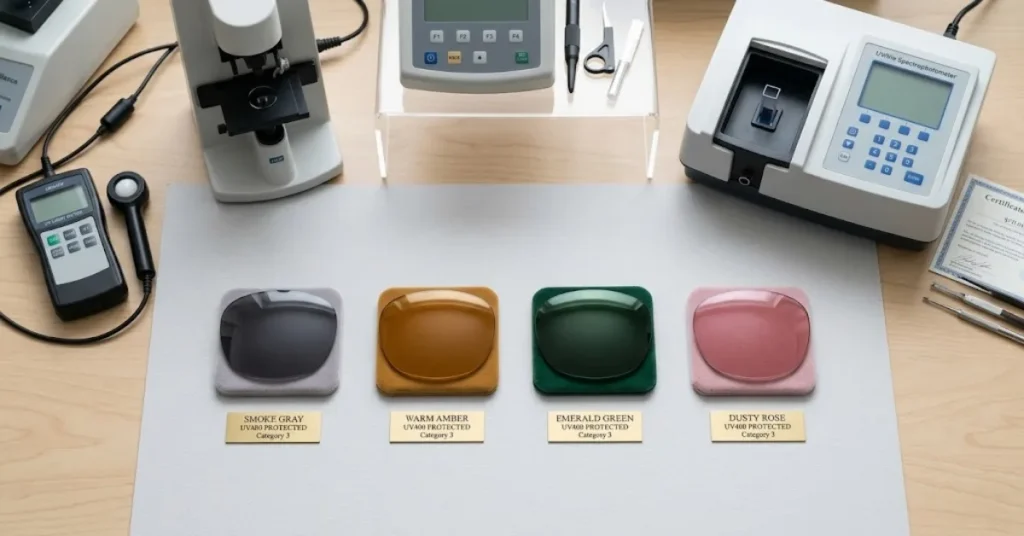
The color of your sunglass lens does not determine whether it is polarized. Both polarized and non-polarized sunglasses can be manufactured in almost any shade. Each hue filters visible light differently, influencing contrast, depth perception, and eye fatigue:
- Gray and smoke tints provide 10% to 15% light transmission, preserving true natural colors without shifting visual tones, making them ideal for direct midday sun.
- Brown, amber, and copper tints offer 15% to 25% light transmission, blocking blue light to sharpen contrast, separate details, and enhance depth perception for driving and sports.
- Green tints balance contrast and color accuracy evenly, dampening glare while preserving crisp shadows across varying lighting conditions.
- Rose and yellow tints feature high transmission ratings for low-light, cloudy, or foggy mornings, sharpening object edges at dawn or dusk.
Frame Geometry and Peripheral Glare Protection
Frame geometry and peripheral glare protection determine whether sunlight bypasses your lenses to cause optical discomfort. Even the most advanced polarized lenses fail to protect your eyes if a loose, flat fashion frame allows unshielded sunlight to reflect off the inner surface of the glass.
Many buyers invest in premium polarized or tinted lenses only to experience continued eye fatigue. The culprit is almost always frame architecture. Flat optical frames sit away from the brow bone and cheekbones, creating large peripheral gaps where harsh sunlight leaks in from above and behind.
To maximize lens performance, consider frame design alongside optical technology:
- Wrap-around frames curve close to facial contours, blocking ambient sunlight from bouncing off the back of the lenses into your eyes during water sports.
- Wide temple arms shield your peripheral vision from lateral glare when driving or fishing on open water.
- Adjustable silicone nose pads ensure the lenses sit at the correct optical distance from your pupils, preventing eyelash contact and lens fogging.
- Everyday urban wear functions well with classic acetate or metal wireframes where casual styling takes priority over complete peripheral light seal.
How to Choose the Right Pair for Your Needs
Selecting between tinted and polarized lenses comes down to your primary environment rather than price tags or trends. If your daily routine involves long highway commutes, coastal fishing, boating, or open water, polarized lenses provide essential glare defense that prevents eye fatigue and sharpens visibility.
For activities where reading digital instrument displays, navigating variable snow terrain, or walking city streets while managing phone notifications matters most, high-grade tinted lenses offer predictable, uninterrupted visual clarity.
Whatever optical style fits your lifestyle, never compromise on certified UV400 protection. Blocking blinding surface glare keeps you comfortable, but filtering out invisible ultraviolet rays protects your vision for the long haul. Pair your chosen lens technology with a well-fitted frame that minimizes peripheral light leakage, verify your UV certification before purchasing, and let your everyday environment dictate the glass in front of your eyes.