

A professional broken key replacement Auckland service involves extracting the snapped metal fragment from your lock cylinder and cutting a new matching key on site. Mobile automotive and residential locksmiths use specialized spiral extractors, hook tools, and mobile key-cutting machinery to restore access within 15 to 45 minutes without damaging the internal lock pins.
What Should You Do Immediately After a Key Snaps in the Lock
When a key breaks inside a lock, stop turning the cylinder immediately and leave the broken metal fragment exactly where it rests. Forcing the remaining piece, reinserting the broken head, or jamming makeshift tools into the cylinder pushes the metal fragment deeper against the internal pins, turning a simple extraction into an expensive lock replacement.
The very first action is to keep your hands off the lock mechanism entirely. Resist the urge to push the broken head back into the keyway to force the door open, because that pressure jams the jagged fracture edge against the brass tumbler pins. Step back and inspect the lock face with a torch to check if any of the broken blade protrudes past the front edge. If the broken shaft sits completely flush or recessed inside the keyway, leave it untouched and contact a certified mobile locksmith in Auckland who has dedicated micro-extractors.
How Does a Professional Locksmith Extract a Broken Key
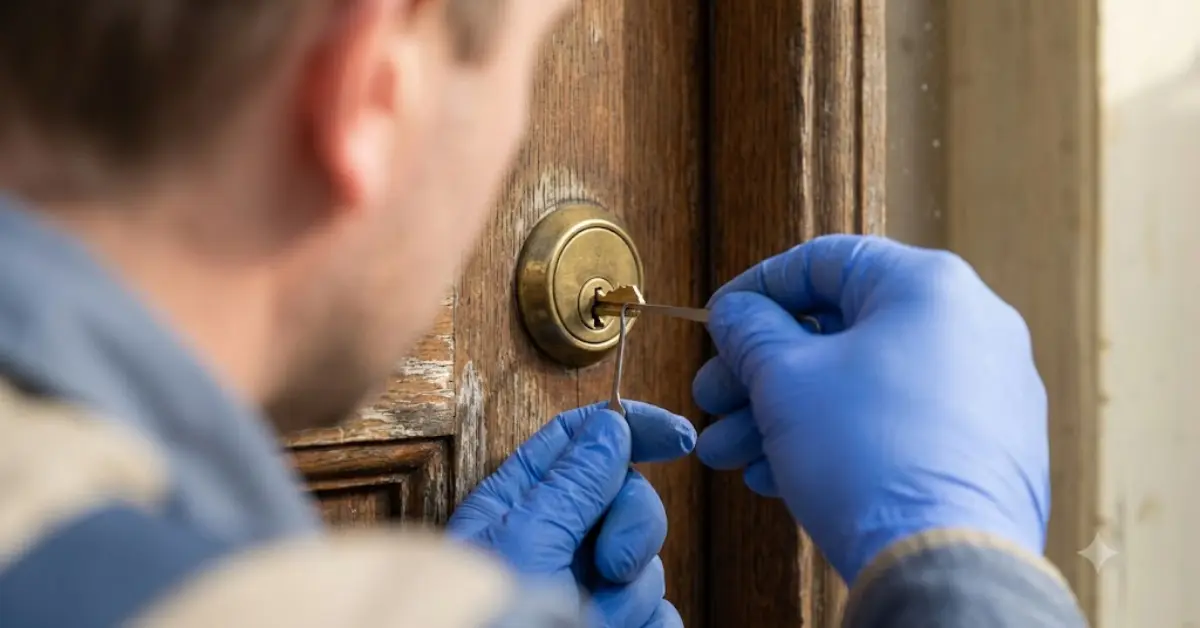
A locksmith extracts a broken key by sliding a hardened steel extractor blade alongside the keyway grooves to hook the key cuts and pull the fragment outward. This mechanical process bypasses the lock pins without drilling or disassembling the cylinder, preserving the integrity of the original lock mechanism.
Professional technicians begin by inspecting the keyway with an illuminated scope to examine how deep the broken metal fragment sits and whether the cylinder is turned off-center. If the plug stopped halfway between locked and unlocked positions, the locksmith gently centers the shear line with a tension wrench so the brass pins can move freely. The technician then puffs dry graphite powder into the chamber to eliminate friction between the brass keyway and the stuck blade, avoiding oily aerosol sprays that attract dust.
Once the cylinder is aligned, the locksmith slides a thin hooked or spiral extractor along the side groove of the key blade. The tool catches one of the lower bitting cuts or a bottom tooth, allowing the technician to apply controlled outward leverage. The broken piece slides forward smoothly until it clears the keyway face. Completing a broken key replacement in Auckland for standard domestic deadbolts typically takes fifteen minutes, while deeply recessed automotive ignitions may take longer to manipulate safely.
Can You Remove a Broken Key Yourself Without Professional Tools
You can remove a broken key yourself only if a portion of the broken blade visibly sticks out past the edge of the keyway. Using household items like paper clips, safety pins, or superglue inside a recessed cylinder usually ruins the lock, pushes the fragment deeper, or bonds the internal tumbler pins permanently.
If a millimeter or two of the broken blade extends past the plug face, you can grip the exposed metal firmly with thin needle-nose pliers and pull directly backward without twisting. Twisting the piece while pulling will wedge the broken teeth against the internal driver pins, causing the key to bind even tighter. A tiny puff of dry graphite lubricant can help the fragment slide out without leaving gummy residues.
If the metal sits below the surface, put your tools away immediately. Inserting sewing needles, bent paper clips, or dental picks into the keyway will only scratch the smooth brass chambers and damage delicate internal springs. Most importantly, never insert superglue or hot glue sticks into the lock opening. Wet cyanoacrylate adhesive instantly seeps down the side channels, gluing the brass tumbler pins to the cylinder housing and turning an affordable extraction job into a complete cylinder replacement.
Why Do Keys Snap Inside House Locks and Vehicle Ignitions
Most keys snap because metal fatigue weakens brass and nickel-silver alloys after years of repeated rotational pressure. Everyday wear thins the metal along the deepest bitting cuts of the key, creating weak stress points that snap under standard turning force, stiff latches, or cold weather contraction.
Standard residential keys consist of relatively soft brass alloys designed to wear down gradually rather than grinding out the lock pins. Over years of daily turning, the metal blade becomes noticeably thin along its deepest cuts. When a key reaches this point of metal fatigue, standard turning pressure is enough to cause sudden structural failure. Door frame movement accelerates this problem, especially when seasonal moisture causes exterior wooden doors to sag and bind the deadbolt against the door frame strike plate.
Vehicle keys snap under slightly different mechanical forces. Cold morning temperatures in Auckland cause old grease inside the ignition barrel to stiffen, creating heavy resistance against the key blade. If a driver forces the key while the steering column lock is bound tightly against the ignition barrel, the excessive torque shears the weakened metal shaft right at the shoulder.
How Does Car Key Replacement Work for Broken Transponder Keys
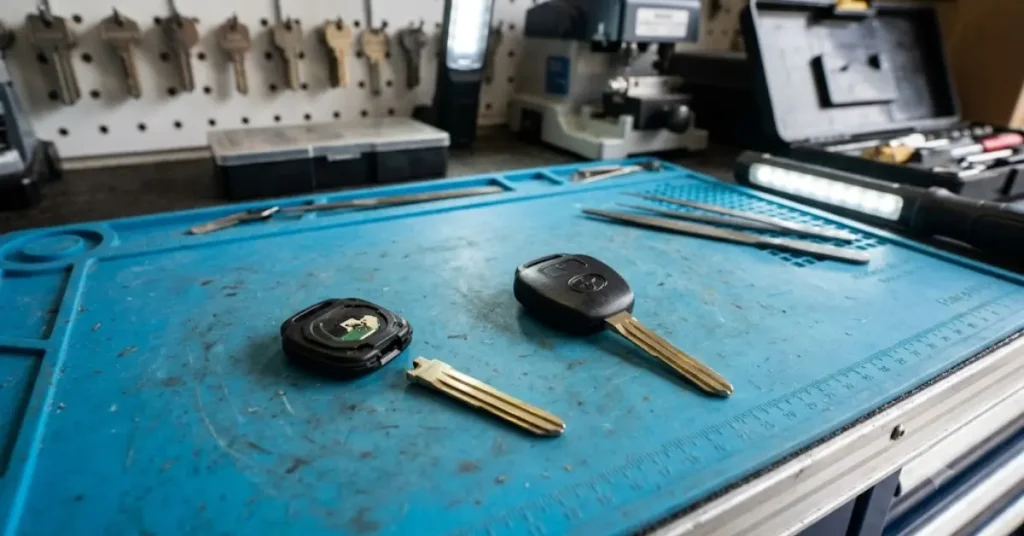
A car key replacement for a snapped automotive key requires cutting a new physical blade, retrieving the original transponder chip, and pairing the new remote with your vehicle immobilizer. If the original head is intact, a mobile automotive locksmith can attach a freshly cut blade to your existing remote shell, avoiding complete dealer reprogramming fees.
Modern vehicle keys carry an internal electronic transponder chip that communicates with the vehicle immobilizer unit. When the metal blade shears off inside the door or ignition cylinder, the mobile locksmith extracts the stuck blade and inspects the plastic head. If the original casing and internal transponder circuit remain undamaged, the technician decodes the mechanical cuts from the broken metal halves and cuts a fresh blade using a computerized mobile mill.
The technician transfers the original programmed chip into a fresh key shell or mounts the newly cut blade to the existing remote head. If the transponder chip was crushed or lost during the break, the locksmith cuts a new laser-track key on site and connects diagnostic programming software to the vehicle OBD2 diagnostic port to program a new security transponder immediately, bypassing expensive towing fees to a dealership.
What Does Broken Key Replacement Cost in Auckland
A broken key extraction in Auckland generally costs between $80 and $220 NZD, depending on cylinder accessibility and whether the job involves a home deadbolt or a vehicle ignition. Cutting a standard residential replacement key costs an additional $10 to $25 NZD, while modern automotive transponder and smart proximity keys range from $150 to $450 NZD.
When booking a broken key replacement Auckland service, your total invoice depends on four specific mechanical and logistical factors.
- Depth of the Broken FragmentA shallow fragment resting near the front of a home deadbolt requires minimal time to retrieve, whereas a fragment pushed deep inside a steering column barrel requires extensive delicate extraction work.
- Lock Hardware CategoryStandard residential pin-tumbler deadbolts are straightforward to service, while commercial high-security cylinders with anti-pick sidebars or specialized euro cylinders take longer to manipulate safely.
- Key Blank TechnologyDuplicating a basic metal residential key costs very little, but replacing a modern automotive remote requires specialized laser cutting, virgin transponder chips, and electronic pairing software.
- Emergency Callout TimingStandard daytime appointments sit at base rates, while after-hours callouts, weekend roadside calls, and public holiday emergencies include higher mobilization fees.
Do You Need to Replace the Entire Lock After a Key Snaps
You do not need to replace the entire lock if the broken key fragment is cleanly extracted without internal mechanical damage. If the cylinder pins and springs remain intact, a simple key cutting service from a code or copy restores complete functionality at a fraction of the cost of new hardware.
The vast majority of broken key extractions leave the internal pins, plug, and springs completely undamaged. Once the metal obstruction is out, testing the cylinder with a spare key confirms whether the mechanism turns smoothly. If the hardware operates without resistance, replacing the lock is an unnecessary expense.
Lock replacement only makes financial sense if the cylinder was already worn out, severely rusted, or physically ruined by aggressive DIY extraction attempts. Property owners who want to upgrade their home security after losing access can also choose lock re-keying instead of total hardware replacement. Re-keying involves altering the internal pin sequence so old keys stop operating, giving you fresh security at a fraction of the cost of buying new designer handles and deadbolts.