

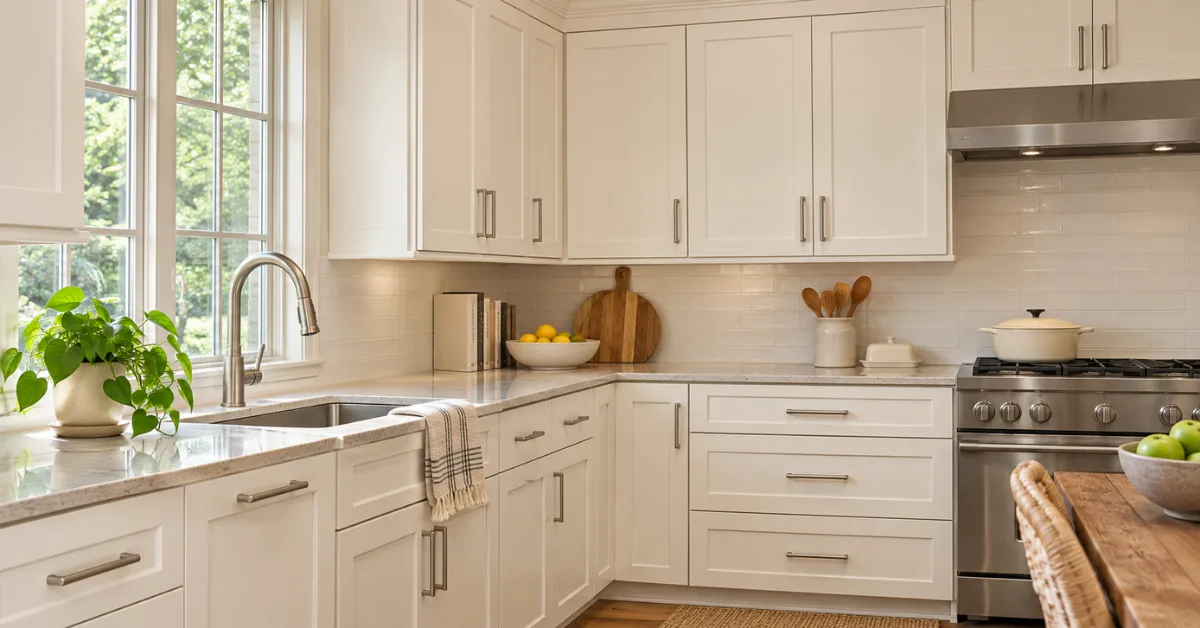
For most kitchen cabinet projects, a cabinet-grade waterborne alkyd or urethane enamel is an effective choice. These specialised coatings are manufactured for doors and woodwork that demand a smooth, washable finish. The right choice depends on your cabinet material, the existing coating, and how you apply the paint.
Sherwin-Williams Emerald Urethane Trim Enamel, Benjamin Moore ADVANCE, INSL-X Cabinet Coat, and BEHR PREMIUM Cabinet, Door and Trim Enamel are four dependable options. Each product has different preparation, levelling, and drying requirements.
Before choosing between them, examine your cabinets closely. Greasy doors, peeling paint, and swollen composite edges need attention first. A higher-priced paint cannot correct underlying structural problems on its own.
Which Paint Should You Use on Kitchen Cabinets?
Choose a product specifically approved for cabinets, doors, or architectural trim. General wall paint should never be your default coating simply because the tin says washable.
Cabinet doors face repeated daily handling, cleaning detergents, and contact with their frames. The coating needs strong adhesion and block resistance, which stops painted surfaces from sticking together when closed. It also needs to level smoothly to limit visible brush marks and roller texture.
Water-based does not mean basic latex wall paint. Several cabinet enamels clean up with water while using advanced alkyd or urethane resins. Read the complete technical data sheet rather than deciding by the cleanup label alone.
Four Cabinet Paints Worth Considering
There is no single best paint for kitchen cabinets across every setting. The following products offer proven performance, but their suitability depends on the surface and the complete coating system.
Sherwin-Williams Emerald Urethane Trim Enamel
Emerald Urethane Trim Enamel is designed for cabinets, doors, and trim. It comes in satin, semi-gloss, and gloss sheens, giving homeowners several options within one product line.
Sherwin-Williams pairs this enamel with Extreme Bond Primer for hard, slick surfaces. Whether that primer is appropriate depends on the existing surface and any tannin bleed that needs sealing. Consider Emerald when you want durable high-traffic kitchen cabinet coatings that dry rapidly between coats.
Benjamin Moore ADVANCE
ADVANCE is a waterborne alkyd paint recognized for outstanding flow and levelling. It is an excellent choice for brush and roller work because application marks settle into a smooth finish.
Its drying schedule requires genuine patience. ADVANCE technical guidance specifies a sixteen-hour recoat interval, and optimum hardness can take up to thirty days. This does not mean the kitchen stays untouched for a month. It means reassembly, cleaning, and complete hardening occur in separate stages.
INSL-X Cabinet Coat
INSL-X Cabinet Coat is a urethane acrylic enamel intended for cabinets and interior trim. The manufacturer highlights adhesion, washability, and resistance to chipping among its core features.
Although Cabinet Coat can adhere to sound, previously finished surfaces without a primer, the surface must still be spotless. It also requires scuffing glossy surfaces for dependable bonding. It belongs on your shortlist when evaluating the best paint for refinishing cabinets that have existing sound coatings.
BEHR PREMIUM Cabinet, Door and Trim Enamel
Behr cabinet enamel is another option for homeowners seeking accessible, cabinet-specific products. Its published instructions list a two-hour recoat time and recommend two finish coats for lasting durability.
Behr calls for standard priming and notes that cooler temperatures and higher humidity extend drying times. Its instructions allow gentle cleaning with a mild detergent after two weeks. The short recoat interval helps with scheduling, but the finish still needs time to cure fully.
What Is the Best Paint Finish for Kitchen Cabinets?
Satin and semi-gloss are both sensible choices. The best paint finish for kitchen cabinets depends on personal taste and the physical condition of the doors.
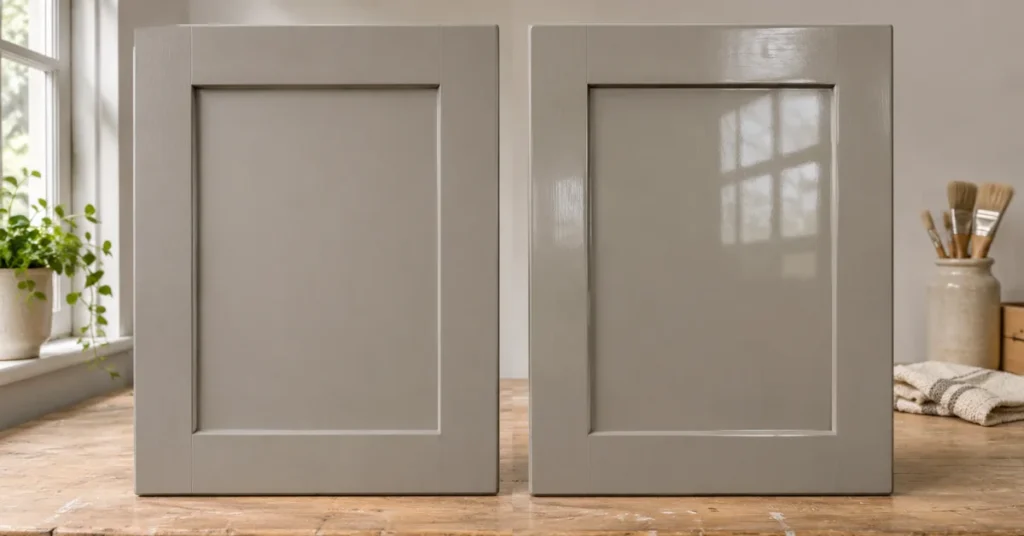
Satin produces a softer reflection than semi-gloss within the same product line. It is a practical starting point when you want painted woodwork without distracting glare across every door.
Semi-gloss creates more visible light reflection. That can highlight detailed moulding, but it also draws attention to minor dents, heavy wood grain, and roller stipple.
Gloss is even more reflective. If you want a glossy appearance, agree on how much filling and surface preparation the job includes beforehand. Always inspect a painted sample upright in your kitchen under both daylight and artificial evening lighting.
Which Cabinet Paint Works Best for DIY Projects?
For DIY projects, choose a cabinet-rated product that suits your tools, drying space, and available time.
A paint with good self-levelling properties helps with brush and roller application, but it still requires careful handling. Over-brushing as the coating begins to set leaves permanent brush ridges. The brush filament, roller nap, and application method must match manufacturer recommendations.
Think about where the doors will dry before taking them down. A kitchen with numerous doors and drawer fronts requires substantial clean floor space. You also need an organized system to track each door, hinge, and screw during reassembly.
What Makes Cabinet Paint Durable in a Busy Kitchen?
Choosing the most durable paint for cabinets is only one part of building a lasting finish. Chemical adhesion, surface cleaning, dry film thickness, and gentle treatment during curing all shape the outcome.
Look closely at the cabinet sections that endure the heaviest daily wear. Pull handles collect hand oils, panels near the stove collect airborne grease, and waste-bin pullouts face constant impact.
These conditions should dictate your preparation plan. Kitchen grease must be thoroughly dissolved. Water-damaged timber requires sealing or replacement. Doors that rub together need hinge adjustments before applying paint.
Choose the Right Primer for Your Specific Surface
A bonding primer and a stain-blocking primer solve completely different paint problems. The right choice depends on the substrate underneath the finish coat.
Bonding primers help coatings adhere to slick, hard-to-grip surfaces. INSL-X Stix and Sherwin-Williams Extreme Bond are established choices for laminates, factory finishes, and previously varnished woodwork.
Stain-blocking primers prevent discoloration from bleeding through light paint. Zinsser BIN Shellac-Based Primer blocks dark knot stains and seals oak tannins effectively. Matching the primer to the actual surface problem prevents peeling and blotchy topcoats.
Why Oak Cabinets Need a Different Approach
Oak features open grain pores that remain visible after standard painting. A fresh colour covers the timber shade while leaving deep grain texture noticeable across the doors.
Visible grain can look handsome, but it looks entirely different from a flat, contemporary finish. If you prefer smooth cabinet doors, ask your contractor about a compatible grain-filling system. Grain filling is a separate trade procedure that requires spreading filler into the pores before priming.
Essential Preparation Steps That Prevent Peeling
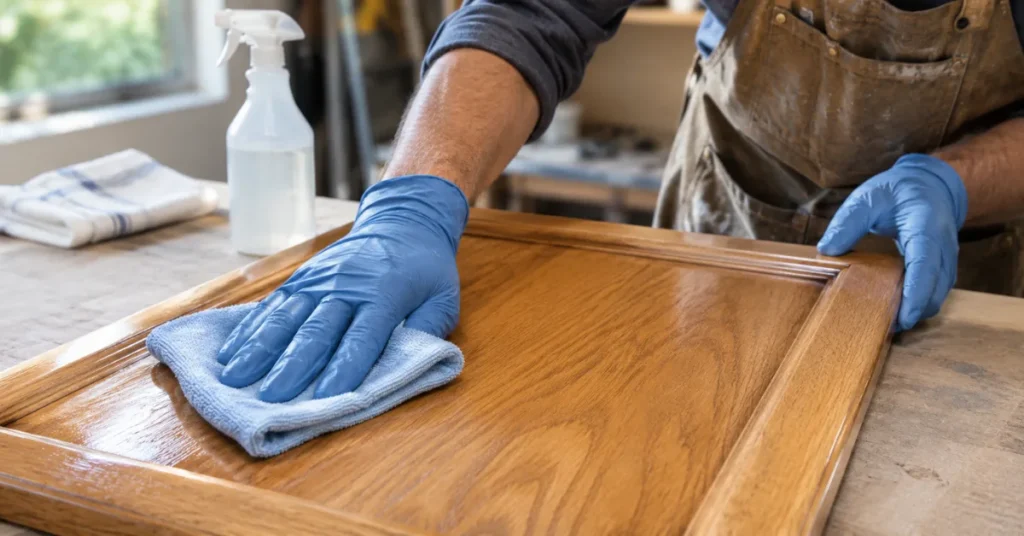
Thorough preparation prevents coatings from chipping off cabinet doors months after application. Follow this proven sequence before opening a can of paint.
- Remove and label every door, drawer front, and piece of hardware.
- Wash the surfaces thoroughly with a grease-cutting cleaner and rinse with clean water.
- Scrape away loose, peeling paint back to sound material.
- Complete agreed timber repairs, nail hole filling, and grain-filling steps.
- Scuff sand all glossy surfaces to create a mechanical bonding profile.
- Vacuum all dust and wipe down panels with a clean cloth before priming.
Never apply a new coating system over a surface that remains damp, greasy, or dirty. Contaminants trapped beneath the paint film will eventually cause adhesion failure.
Understanding Dry Time, Recoat Time, and Cure Time
These common terms describe distinct stages of the paint drying cycle.
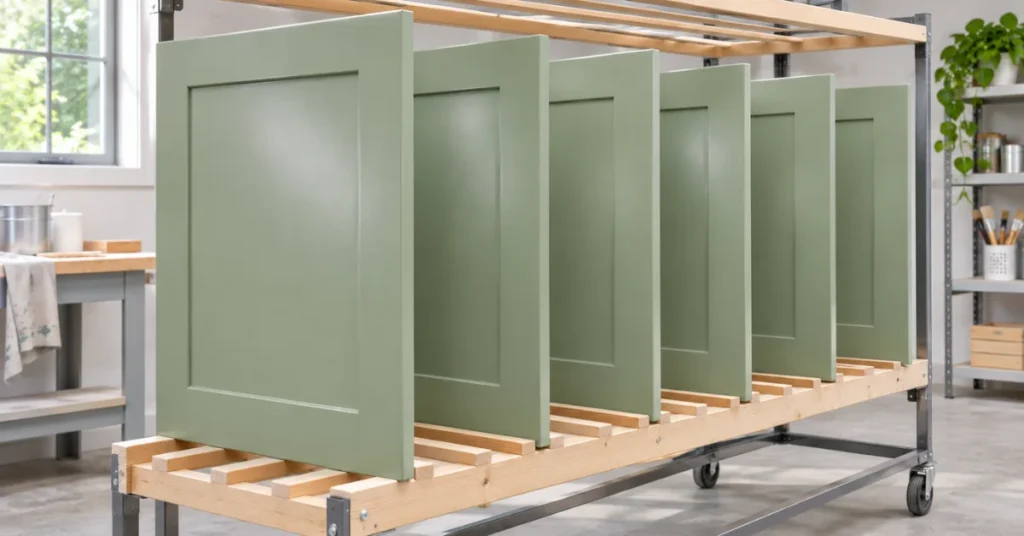
Dry-to-touch means the surface feels dry when touched lightly. Recoat time tells you when another coat can be applied safely without lifting the previous layer. Handling instructions explain when components can be reinstalled without leaving fingerprints.
Curing continues as the resin system cross-links into a hard shell. A cabinet door may be ready for reassembly days before the finish can tolerate scrubbing. Request a written care schedule and avoid harsh household cleaners until the paint cures completely.
Questions to Ask a Professional Cabinet Painter
Investing in professional cabinet paint requires selecting a contractor who understands coating chemistry and meticulous surface preparation.
Before signing a contract, ask which specific primer and topcoat the crew will use. Ask how they remove grease, whether wood grain will remain visible, and whether doors will be sprayed off-site or brushed in place. Finally, ask when normal kitchen use can safely resume.
For homeowners in Greater Baton Rouge, Swift Painting LLC is a local option to contact about cabinet painting. When requesting an estimate, ask which paint and primer the team recommends for your cabinets, how the surfaces will be prepared, and when normal kitchen use can resume. These details help you understand the proposed work before making a decision.