

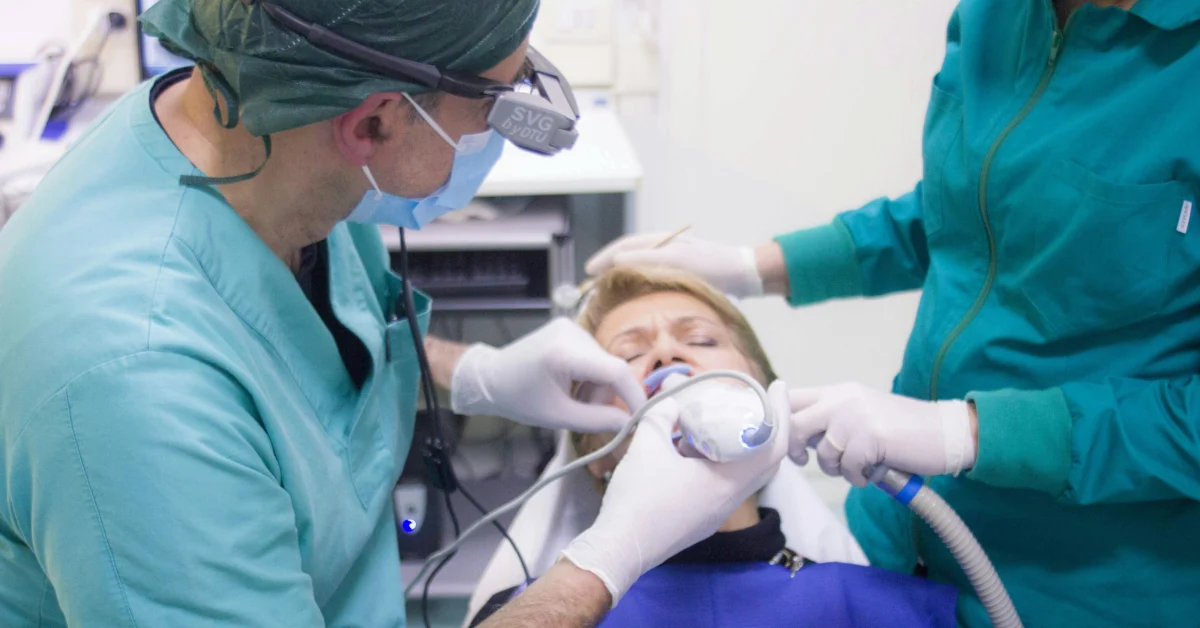
Booking a dental visit is simple enough, but sitting in the chair while the dentist preps the needles and drills is where most people freeze up. Severe dental anxiety causes millions of adults to put off necessary care for years, turning small cavities into painful root canals or pulled teeth. Sedation dentistry solves this problem by using relaxing medicine to keep you calm and pain-free while the clinical team watches your body signals from start to finish.
Getting through your visit without issues comes down to knowing the drill. When you know the timeline, the fasting rules, and what recovery actually looks like at home, the whole appointment becomes predictable and easy to handle.
The Four Levels of Dental Sedation
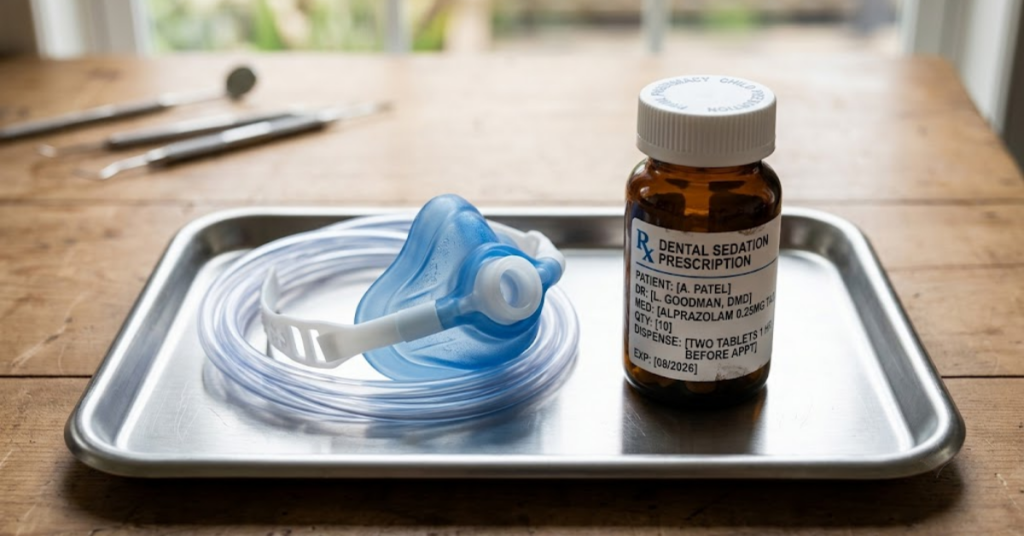
Sedation is not one-size-fits-all. Your dentist looks at your anxiety level, the type of work you need done, and your health history to choose the right approach for you.
| Sedation Level | How You Take It | Time to Start Working | How Awake You Feel | Recovery Time | Ride Home Needed |
| Nitrous Oxide | Small nose mask | 2 to 3 minutes | Fully awake and chatting | 5 to 10 minutes | No |
| Oral Sedation | Swallowed pill | 45 to 60 minutes | Heavy, drowsy, very calm | 12 to 24 hours | Yes |
| IV Sedation | Arm tube | 1 to 2 minutes | Deep twilight sleep | 24 hours | Yes |
| General Anesthesia | IV line and breathing tube | Under 1 minute | Completely asleep | 24 to 48 hours | Yes |
Nitrous oxide, often called laughing gas, is the lightest choice. You breathe a mix of gas and oxygen through a soft rubber nose mask. Within minutes, you feel a warm, floaty feeling in your arms and legs. You stay awake, aware of what is happening, and able to answer questions. When the work is done, the dentist gives you pure oxygen for five minutes to flush the gas out of your lungs so you can drive yourself home right away.
Oral sedation involves swallowing a prescribed calming pill, usually from the valium family, about an hour before work starts. By the time you sit in the chair, you feel heavy and relaxed. You can still hear the dentist and follow simple directions, but your nervousness is gone. Most patients doze off and wake up with almost no memory of the tools, sounds, or time spent in the chair.
IV sedation delivers fast-acting sedatives directly into your vein through a small line in your hand or arm. This lets the doctor adjust the medicine right away as the procedure goes on. Time seems to disappear under IV sedation, so a two-hour procedure feels like it took five minutes. General anesthesia knocks you out completely, needs a breathing tube, and is mainly used for big hospital-style jaw surgeries.
Getting Ready the Day Before Your Visit
Your safety during sedation starts with what you do at home the day before. Sedative drugs relax your body and slow down your swallowing reflexes. Ignoring these basic setup rules creates serious risks and will make the clinic cancel your visit.
Food and Drink Rules
Showing up on an empty stomach is the most important rule for pill and IV sedation. Having food in your belly while sedated can make you throw up and choke.
- Stop eating solid foods, milk, and thick drinks at least eight hours before check-in.
- Plain water or black coffee without milk or sugar is fine up to two hours before you arrive.
- Put nothing in your mouth during the final two hours, including water, gum, breath mints, and ice.
Sharing Your Daily Pills and Health History
Your dental team needs an honest list of everything you take so the sedatives do not clash with your daily medicines.
- Tell the staff about all heart medicines, daily vitamins, pain relievers, and herbal supplements you take.
- Blood thinners like aspirin or ibuprofen usually need to stop a few days ahead of time, but only if your regular doctor agrees.
- Daily blood pressure pills are usually taken on schedule the morning of your visit with just a tiny sip of water.
- Herbal items like garlic pills or St. John’s wort can thin your blood or mess with sedatives, so mention them early.
Rides and What to Wear
Sedation stays in your system for hours, leaving your balance and reaction times clumsy. For pill sedation, IV sedation, and general anesthesia, you cannot drive or take an Uber alone. A family member or friend must bring you in, wait during the appointment, drive you home, and watch over you for a few hours.
Wear loose, comfortable clothes with short sleeves so the team can easily place blood pressure cuffs and IV lines. Leave jewelry, fake nails, contact lenses, and dark nail polish at home so the finger sensor can easily read your blood oxygen levels.
What Happens in the Treatment Chair
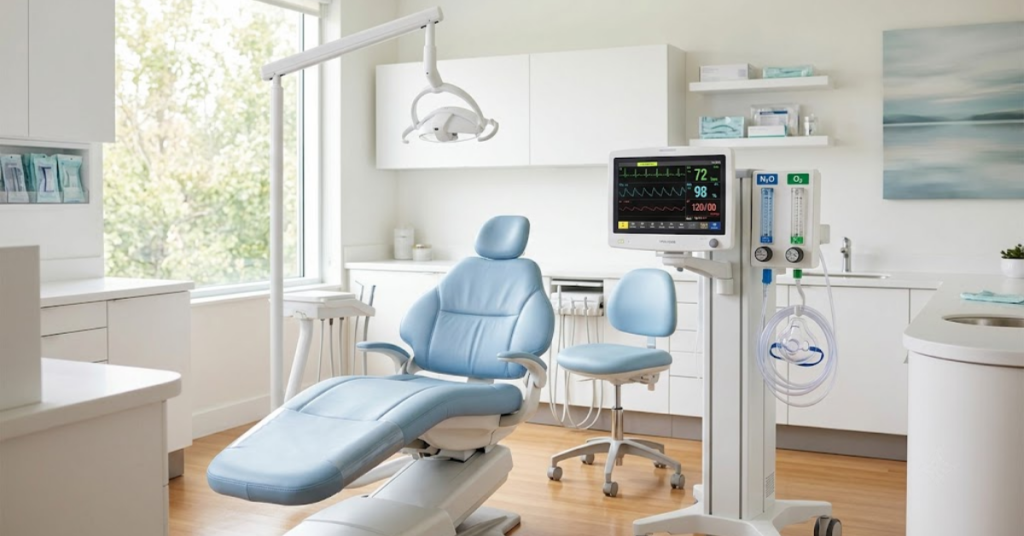
Once you are in the chair, the clinical staff hooks up basic monitors before giving you any sedatives. This gives them a steady stream of data to make sure your heart, lungs, and blood pressure stay safe while the dentist works.
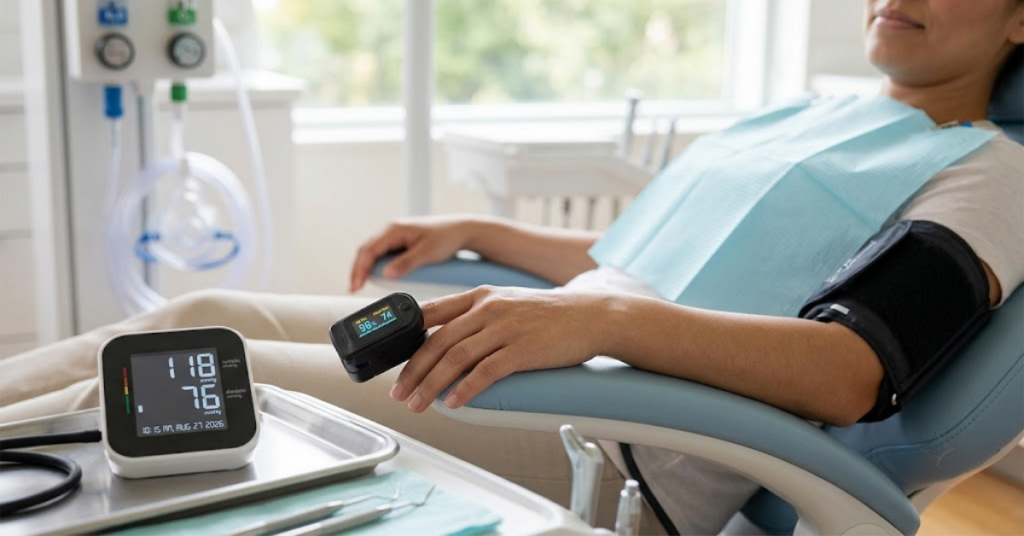
A small clip on your finger tracks your pulse and oxygen levels. An automatic arm cuff checks your blood pressure every five minutes, and a small plastic nose tube checks your breathing rate.
Local numbing shots are still needed, but the sedation makes sure you do not feel or care about them. Once you are completely relaxed, the dentist numbs your gums with local shots. The sedation keeps your brain from feeling stressed, while the numbing shots block pain at the tooth, giving you an easy, pain-free appointment.
Recovery at Home Over the First Day
Waking up from dental sedation takes time. The medicine clears out of your body slowly, leaving you groggy, slow, and sleepy for several hours.
[Clinic Recovery]  ->  [Home Rest & Water]  ->  [Soft Food Diet]  ->  [Back to Normal]
   (0 - 45 mins)            (1 - 6 hours)           (6 - 24 hours)       (After 24 hours)
   Vitals checked         Sleep with head up      Smooth foods only    Drive and work
   Ride takes over        Small sips of water     No drinking straws   Full energy back
Before you head home, you will rest in a recovery area for 30 to 45 minutes until your dizziness clears and you can stand steadily. The staff will explain your home care sheets directly to your driver so that someone with a clear head knows what to do.
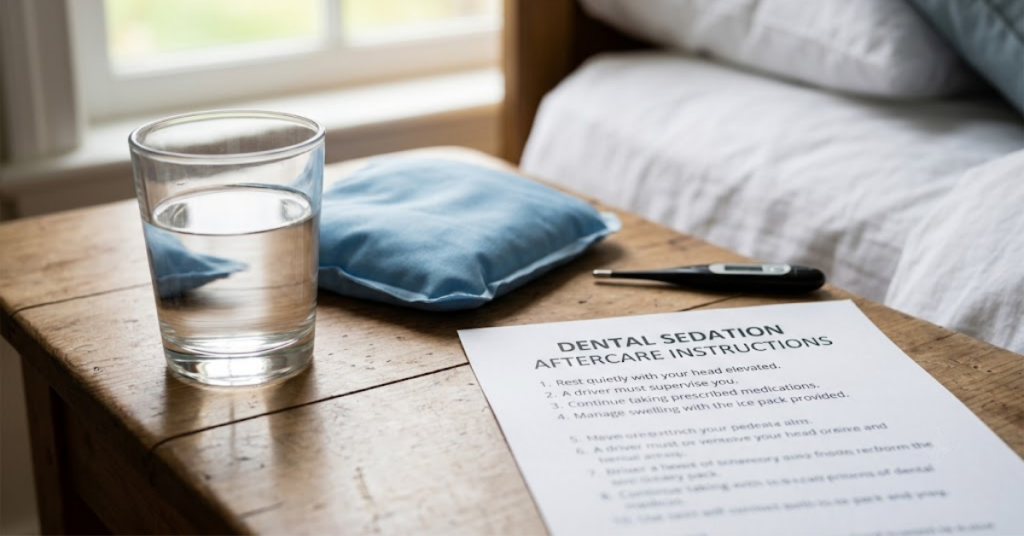
Once you are home, just focus on resting. Set up a comfortable spot on the couch or bed with pillows propping up your head to help you breathe easily and keep swelling down.
- Do not drive, ride a bike, or use power tools for at least 24 hours.
- Do not make big life choices, sign work papers, or look after toddlers while groggy.
- Stay home and avoid hard workouts, which can raise your blood pressure and cause gum bleeding.
Start your meals with small sips of cool water. If your stomach feels fine, move on to smooth, soft foods like broth, applesauce, yogurt, pudding, or mashed potatoes. Avoid hot soup and crunchy snacks while your mouth is still numb so you do not accidentally chew your cheek. Never drink through a straw because the suction can pull open your healing gums and cause severe pain. Take your pain pills before your mouth numbing wears off to stay ahead of any soreness.
How to Pick the Right Sedation Dentist
Not every dental office manages sedation with the same safety standards. Doing dental work and managing sedatives are two different jobs that require separate attention.
Dr. Lindzy Goodman, DMD, points out that the best dental practices split up the dental work from the anesthesia monitoring. For deep IV sedation, look for an office that brings in a dedicated dental anesthesiologist or certified nurse anesthetist. Having one person watching your breathing and heart rate lets the dentist put 100 percent of their focus on fixing your teeth. When booking a consultation, ask the office directly who will be watching your monitors during the procedure.
Knowing what to expect takes all the fear out of your dental visit. Following your fasting schedule, sharing an honest medical history, and having a trusted driver ready lets you get your teeth fixed in total comfort.