

People decide whether to trust a local business within seconds. Most customers make this decision with their eyes before reading any text. For example, a well-lit portrait, a steady introduction video, and a clean visual style all signal competence. On the other hand, poor audio and awkward framing signal carelessness. High-quality brand photography paired with clear video builds lasting local authority across regional markets.
Many business owners treat visual content as an occasional chore. Consequently, they record shaky promotional clips without basic lighting or structural planning. This unplanned approach produces scattered visual assets that look amateurish on modern websites. High-impact business brand photography and focused local video work together as a unified system. Therefore, investing in dedicated brand photography gives local companies the credibility required to win nearby clients.
Mastering Lighting Setups for Local Business Visuals
Lighting is the primary element separating clean commercial media from accidental footage. Cameras are forgiving of modest hardware. However, cameras are never forgiving of poor lighting. Using a large, diffused light source wraps flattering illumination around a face. For instance, a softbox or a north-facing window with a sheer curtain smooths skin textures effectively.
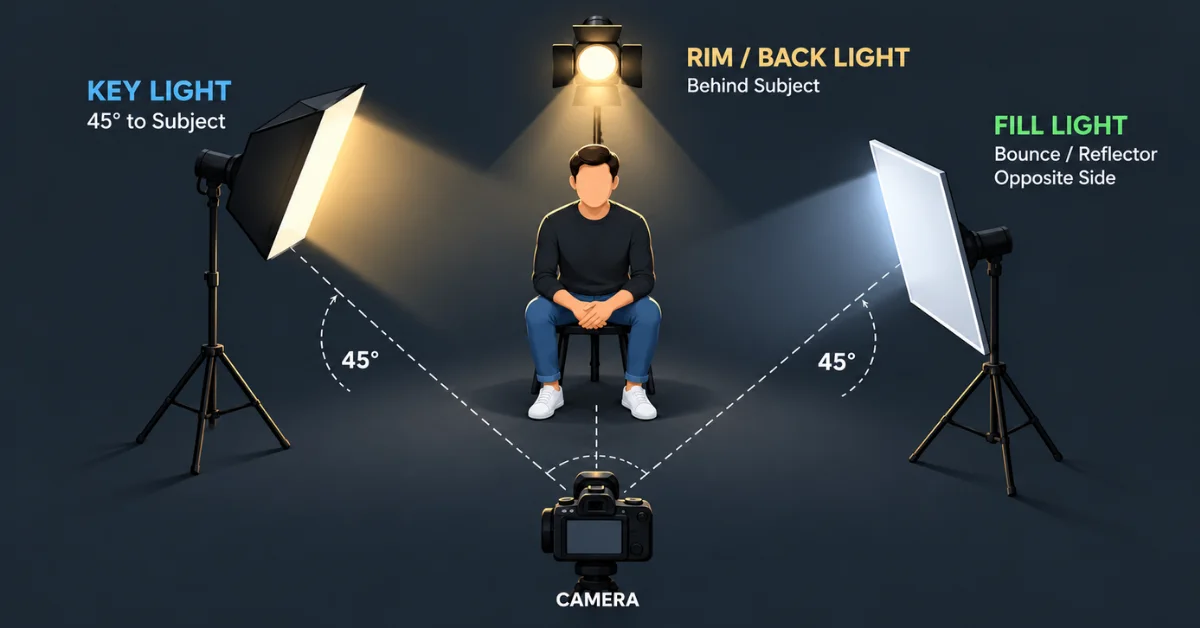
Building a simple three-point setup requires three deliberate light placements. First, the key light serves as the primary source. Place it forty-five degrees to one side of the camera and slightly above eye level. Next, place a fill light or a white foam bounce board on the opposite side. This lifts deep shadows without flattening natural jawline definition. Finally, place a rim light behind the subject. This light separates the hair and shoulders from the background, which adds immediate visual depth to your business brand photography.
Color temperature discipline remains necessary across every single scene. Natural daylight sits near five thousand six hundred Kelvin. In contrast, standard indoor bulbs sit near three thousand Kelvin. Mixing these competing sources creates blue and orange skin patches that are difficult to correct in editing. Therefore, either block the window completely and use artificial lamps, or turn off indoor bulbs and rely on daylight. Lock a manual white balance on your camera to prevent sudden color shifts.
Camera Positioning and Framing Choices That Hold Up
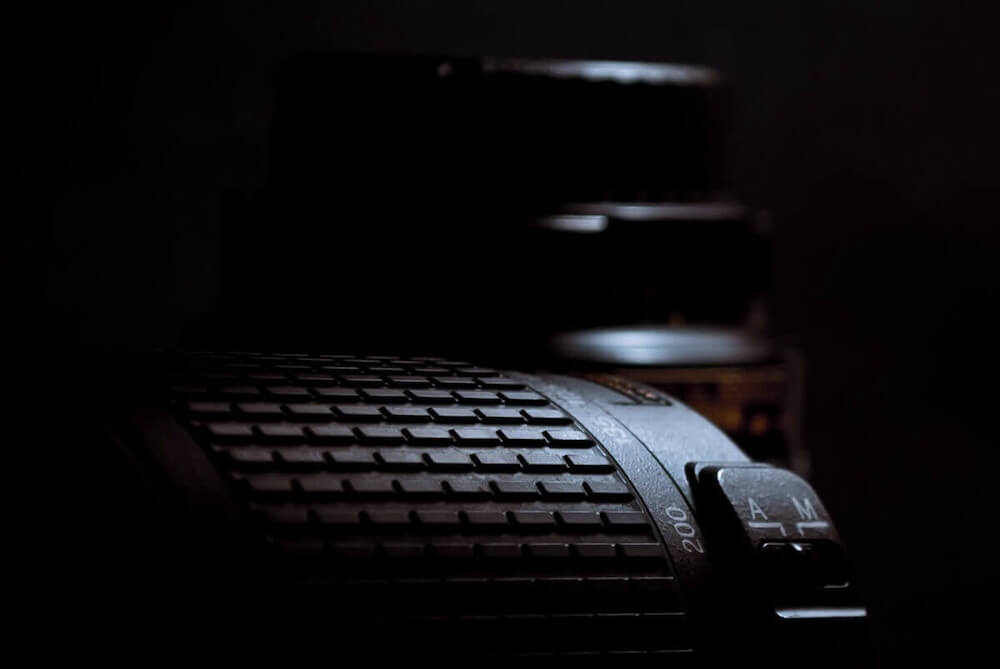
Selecting the proper lens focal length prevents facial distortion. For portraits and talking-head business video, choose a focal length between fifty millimeters and eighty-five millimeters. Very wide lenses used close up stretch facial features unnaturally. Therefore, when staging a commercial branding photoshoot, step backward and use the two-times telephoto lens rather than leaning in close with a wide smartphone lens.
Camera height sets the psychological tone of the entire interaction. Align the camera lens precisely at the eye level of your subject. Tilting the camera downward diminishes the person. Conversely, shooting from a low angle creates an awkward, dominating perspective. For interview-style videos, have the subject look just beside the lens at a seated interviewer. In addition, keep that eyeline consistent across every take.
Aperture selection controls background blur and visual emphasis. Opening a prime lens aperture to f two point eight blurs background clutter while keeping the face crisp. However, do not open the aperture so wide that the eyes go soft. Clean composition follows the rule of thirds by placing the eyes near the upper third line. Leave comfortable headroom above the hair, and maintain lead room in the direction the subject faces.
Audio Discipline and Controlling Room Noise
Online viewers tolerate modest visual quality, but they leave immediately when audio sounds bad. Built-in phone and laptop microphones capture excessive room echo and air conditioning hum. Therefore, crisp spoken sound requires placing an external lavalier microphone on the collar or using a directional shotgun microphone nearby.
Controlling physical room sound requires proactive preparation before recording. First, turn off noisy office appliances and silence computer cooling fans. Next, close heavy window blinds to eliminate traffic noise from nearby streets. Record five to ten seconds of room silence before speaking. This gives audio editing tools a clean noise print for background sound removal. As a result, your spoken message sounds clear and authoritative.
Primary Types of Visual Media Needed for Local Growth

A comprehensive production should generate distinct visual categories tailored to specific customer conversion steps:
- Professional executive headshots framed from the chest up against clean backgrounds establish leadership credibility on local directories and team pages.
- Environmental portraits showing team members actively solving customer problems prove operational competence inside real commercial workspaces.
- Detailed macro photographs of physical tools, proprietary equipment, and premium materials prove craftsmanship and building pride.
- Customer collaboration scenes capturing genuine consultations demonstrate warm client relationships and approachable service.
- Wide horizontal compositions with generous negative space provide clean canvas areas for website banners and promotional text.
- Short service explanation videos answer common client questions directly across local social media feeds.
- Behind the scenes process images illustrate authentic daily operations and operational transparency.
Developing these diverse types of brand photography ensures that your business maintains fresh promotional assets throughout the entire year.
Storyboarding and Scripting the Sixty Second Business Video
Most ineffective business videos fail because planning stopped at the decision to start filming. A simple storyboard prevents wasted filming time and rambling edits. In fact, a sixty-second video that clearly answers one specific question will outperform a long video that tries to cover everything.
A reliable promotional business video follows a simple four-step structure. First, deliver a sharp hook within the first five seconds by stating the exact problem the client cares about. Second, provide one sentence of context explaining who you are and why you can solve it. Third, present clear substance by demonstrating the actual process or practical answer. Finally, deliver a single next step, such as directing the viewer to call your office or visit a service page.
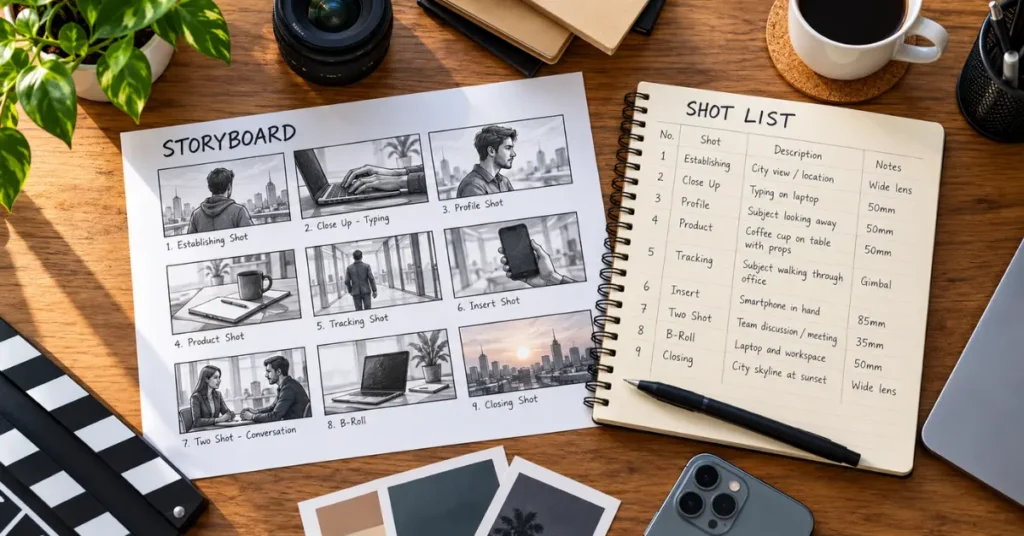
Capturing secondary cutaways turns simple interviews into polished commercial productions. Record tight b-roll shots of hands operating tools, team handshakes, and completed projects. These extra cutaways cover editing mistakes and hide verbal pauses cleanly. In addition, scheduling cutaways during a planned branding photoshoot provides visual assets that work for both video transitions and static web graphics.
Practical Brand Photography Tips for Studio Execution
Following proven brand photography tips keeps your visual identity consistent across all promotional channels. Keep wardrobe choices simple and aligned with brand colors. For instance, solid neutral tones like navy, charcoal grey, cream, and soft olive photograph cleanly without distracting viewers.
Avoid dense geometric patterns, tight pinstripes, and thin houndstooth fabrics. These tight patterns produce a flickering distortion known as the moire effect on digital displays. Bringing three distinct wardrobe variations to your branding photoshoot provides flexibility for different platforms. A formal jacket works well for business directories, while a casual branded shirt suits everyday social media updates.
Maintain a consistent editing style across every delivered image. Applying random filters or erratic contrast adjustments makes an organization appear unorganized. Therefore, establish a clean color grade that matches your visual identity guidelines and apply it uniformly across all final media.
Strategic Asset Repurposing and Multi-Channel Distribution
Producing good visual media represents half of the commercial marketing challenge. The other half involves adapting completed assets to match different digital channels. For example, one ten-minute recorded interview can produce a full website video, three vertical short-form reels, two customer quote graphics, and several business brand photography portraits for team bios.
Websites require technical optimization to protect loading speed. Convert large photo files into modern WebP formats and add descriptive text for search engines. Furthermore, add closed captions and transcripts to every embedded video. This helps people who watch without sound and allows search crawlers to index the full spoken text.
Visual assets age as physical workspaces change and team members evolve. Therefore, review commercial image libraries and promotional videos annually. Update key headshots when personal appearances change, and replace outdated project footage with recent work. Regularly refreshing your brand photography protects local authority and confirms to prospective clients that your business operates at modern market standards.