

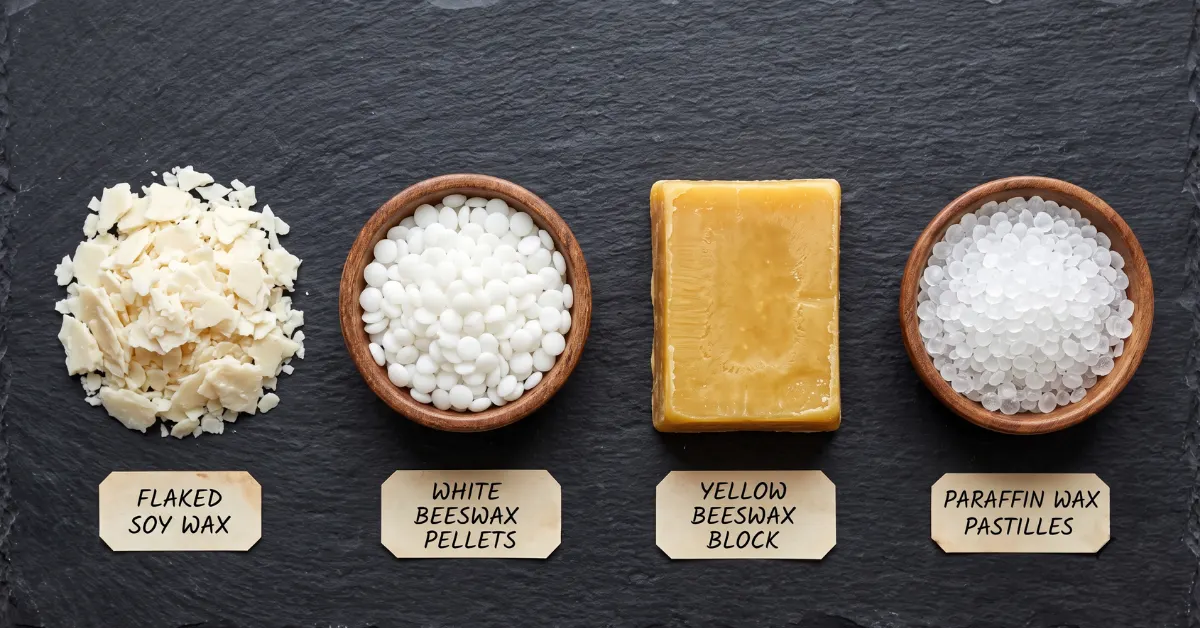
Selecting the wrong candle wax ruins your burn profile, kills your scent throw, and wastes money on failed batches. Wax is not just a container filler. It is the fuel system for your candle. Every wax variety has distinct melting points, fragrance retention limits, shrinkage rates, and crystal structures that dictate how it performs in a jar, a free-standing mold, or a wax melt.
Choosing the right wax comes down to matching your candle format with the physical properties of the wax.
| Wax Type | Melt Point | Pour Temperature | Fragrance Load | Best Application | Shrinkage | Cure Time |
| Soy (464 / 415) | 45°C to 54°C | 55°C to 60°C | 6% to 9% | Container jars, tea lights | Minimal | 10 to 14 days |
| Paraffin (Igi 4630 / 1274) | 48°C to 62°C | 70°C to 85°C | 8% to 12% | Pillars, tapers, containers | High | 24 to 48 hours |
| Beeswax (Yellow / White) | 62°C to 65°C | 70°C to 75°C | 0% to 5% | Pillars, tapers, rolled sheets | High | 3 to 5 days |
| Coconut Wax | 40°C to 50°C | 50°C to 55°C | 8% to 12% | Luxury container candles | Very low | 7 to 10 days |
| Gel Wax (Penreco) | 75°C to 85°C | 85°C to 95°C | 3% to 6% | Decorative transparent jars | Minimal | 24 hours |
| Microcrystalline | 60°C to 93°C | 75°C to 85°C | Varies by blend | Wax modifier, pillar hardener | Low | 48 hours |
Detailed Breakdown of Candle Wax Varieties
1. Soy Wax
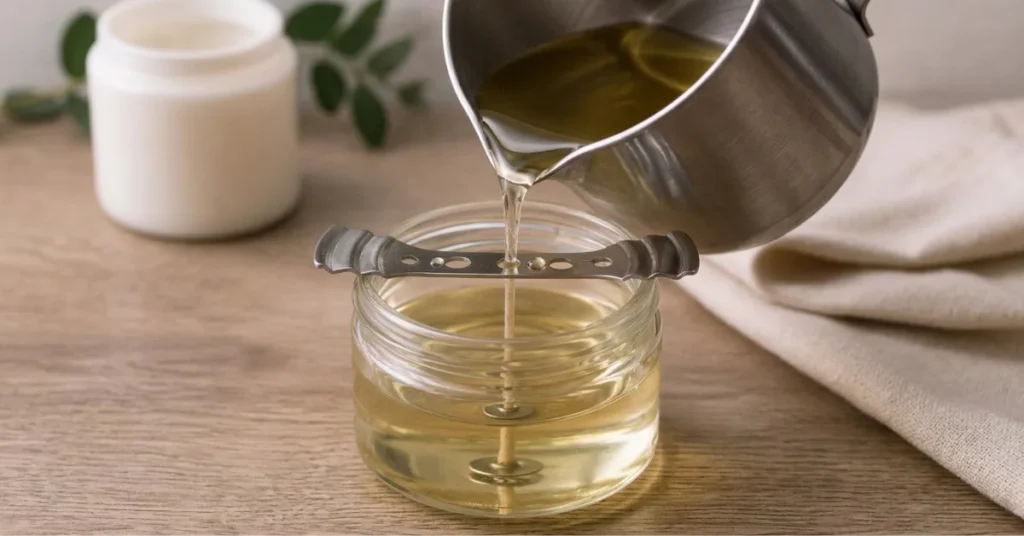
Soy wax is a hydrogenated vegetable oil made from soybeans. It dominates the natural candle market because it burns cleanly, burns at a lower temperature, and has high consumer appeal.
- Best used for: Container candles, travel tins, and smooth jar fills.
- Working temperatures: Heat to 85°C to break the crystal memory, add fragrance oil at 75°C to 80°C, and pour between 55°C and 60°C.
- Fragrance capacity: Safely holds 6% to 9% fragrance oil by weight. Pushing past 10% causes oil weeping and poor burn quality.
- Common challenges: Soy wax naturally develops frosting (white crystalline structures on the surface) and requires a long cure time of at least two weeks before test burning. It also contracts very little, making it useless for pillar molds.
2. Paraffin Wax
Paraffin is a refined petroleum byproduct that remains the industry benchmark for commercial fragrance throw and bold color saturation.
- Best used for: High-throw container candles, standalone pillars, votives, and wax melts.
- Working temperatures: Heat to 85°C to 90°C and pour between 70°C and 85°C depending on the blend.
- Fragrance capacity: Holds up to 10% to 12% fragrance oil effortlessly without sweating.
- Common challenges: Paraffin shrinks heavily as it cools. This makes it ideal for releasing cleanly from metal or silicone pillar molds, but container paraffin requires a second pour to fill the sinkhole around the wick.
3. Beeswax
Beeswax is a completely natural, dense wax produced by honeybees. It has a natural honey aroma, burns exceptionally long, and releases negative ions that help clear indoor air.
- Best used for: Taper candles, carved pillars, and natural unscented tapers.
- Working temperatures: Melt between 62°C and 65°C. Never heat above 85°C as it can scorch and darken. Pour around 70°C to 75°C into pre-warmed molds.
- Fragrance capacity: Poor fragrance carrier. Limit fragrance additions to 3% to 5% or leave it entirely natural.
- Common challenges: Because of its high viscosity and hardness, beeswax requires thick, square-braided cotton wicks. Standard braided wicks will drown in the melt pool.
4. Coconut Wax
Coconut wax is pressed from the meat of coconuts and hydrogenated into a rich, soft wax. It provides single-pour container candles with flat tops and strong hot throw.
- Best used for: High-end boutique container candles and luxury candle lines.
- Working temperatures: Heat to 75°C to 80°C, stir in fragrance, and pour at low temperatures around 50°C to 55°C.
- Fragrance capacity: Excellent oil retention, easily carrying 9% to 12% fragrance load without surface seepage.
- Common challenges: Pure coconut wax has a very low melt point (around 40°C) and will liquefy in warm climates. Commercial makers blend it with small percentages of soy, paraffin, or microcrystalline wax to improve structural firmness.
5. Gel Wax
Gel wax is a clear blend of mineral oil and thermoplastic resin. It burns twice as long as paraffin and provides a transparent look.
- Best used for: Novelty candles with embedded non-flammable items like shells, sea glass, or glitter.
- Working temperatures: Heat slowly between 85°C and 95°C until completely liquid.
- Fragrance capacity: 3% to 6%. You must strictly use non-polar fragrance oils with a flashpoint above 77°C to prevent cloudiness or fire hazards.
- Common challenges: Gel wax easily traps air bubbles if stirred too fast. Pour slowly down the inside edge of a pre-warmed glass container to keep the wax clear.
6. Microcrystalline Wax
Microcrystalline is an elastic, highly refined wax derived from heavy petroleum fractions. It is rarely used on its own for candles. Instead, it serves as an additive.
- Best used for: Hardening soft vegetable waxes, preventing frosting in soy blends, improving mold release, and modifying flexibility.
- Usage rate: Add 1% to 5% by weight to your primary wax batch to boost opacity, increase oil retention, and smooth out surface craters.
How to Match Wax to Your Specific Project
Container Jars and Tins
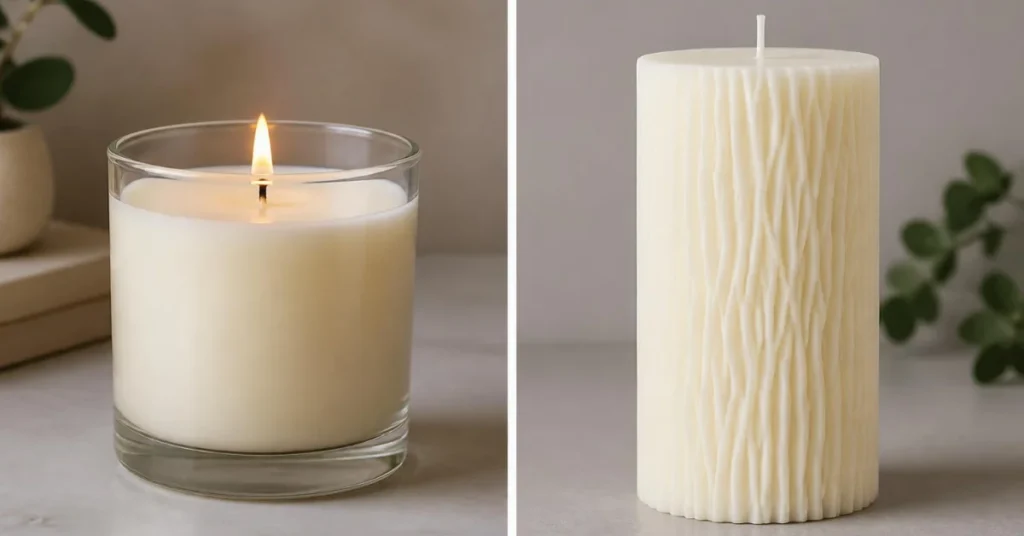
For jars and vessels, you need a soft wax with low shrinkage so it adheres tightly to the glass without pulling away and creating wet spots.
- Top choices: Soy wax, coconut-soy blends, or soft container paraffin.
- Key rule: Pre-heat your glassware to 35°C to 40°C before pouring to ensure even wall adhesion.
Free-Standing Pillar Candles and Tapers
Pillars and tapers need hard wax with a high melting point and significant shrinkage to slide out of rigid molds cleanly.
- Top choices: Beeswax, hard paraffin (melt point above 58°C), or specialized pillar soy wax (like BW-921).
- Key rule: Never use standard container soy wax in a pillar mold or it will stick and tear during demolding.
Wax Melts and Tarts
Wax melts require a medium-hard wax that releases cleanly from plastic clamshells yet melts quickly on low-wattage warmers.
- Top choices: Tart-grade soy wax, paraffin tart blends, or a 70/30 soy-paraffin blend.
- Key rule: Increase fragrance load to 10% or 12% since there is no open flame to burn off the scent molecules.
Critical Production Variables That Impact Performance
Fragrance Binding Temperatures
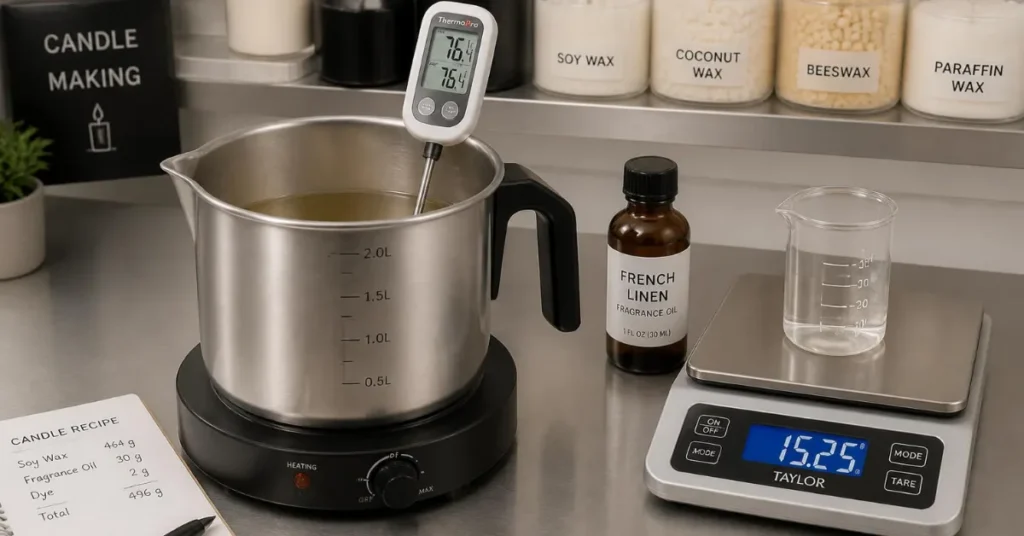
Pouring fragrance oil into wax that is too cold prevents the oil from binding with the wax molecules, leading to oil separation and fire hazards. Adding fragrance to overheated wax burns off the delicate top notes. Add fragrance oil at 75°C to 80°C for soy and paraffin, and stir continuously for two full minutes to guarantee a stable bond.
Proper Wick Sizing
A wax is only as good as the wick driving it. Dense waxes like beeswax need thick square-braid wicks. Viscous vegetable waxes like soy perform best with flat-braided cotton wicks interwoven with paper filaments (like CD or ECO series). Paraffin burns cleanly with standard zinc-core or flat cotton braided wicks (like HTP series).
Cure Times
Wax requires time for its crystalline matrix to fully stabilize. Rushing the test burn gives a false impression of poor hot throw.
- Paraffin: 24 to 48 hours.
- Beeswax: 3 to 5 days.
- Soy and Coconut: 10 to 14 days minimum for full fragrance throw development.
Sourcing High-Grade Raw Materials
Reliable batch consistency starts with the quality of your raw materials. Cheap, unrefined waxes often contain moisture pockets, inconsistent melting points, and chemical residues that ruin fragrance throw and burn times.
For professional-grade wax stocks, suppliers like KSMA provide pure, lab-tested candle waxes including refined beeswax, natural soya wax, coconut wax blocks, high-clarity gel wax, and specialized microcrystalline modifiers. Sourcing from a dedicated raw-materials provider ensures that your melt points, purity levels, and fragrance loads perform identically from batch to batch.
Matching the correct wax to your target candle format removes the guesswork from your production process. Evaluate your vessel type, desired scent throw, and cure schedule, then build your formula around the specific melt point and shrinkage traits of your chosen wax. Testing single variables in small test batches will always be the fastest way to dial in a clean, consistent burn.