


Selecting sustainable packaging means redesigning physical containers, raw supply chains, and disposal pathways to eliminate persistent waste without sacrificing transit protection. In modern manufacturing, businesses face strict regulatory scrutiny and rising consumer demand for authentic circularity. Adopting verified sustainable packaging solutions helps companies eliminate virgin petroleum dependencies, decrease freight emissions, and prevent durable materials from ending up in municipal landfills.
Many brands mistakenly treat environmental initiatives as superficial marketing slogans rather than foundational engineering challenges. Swapping traditional protective boxes for unverified green alternatives frequently leads to broken container seals, damaged freight, and massive material waste across the supply chain. A practical approach to sustainable packaging evaluates the full life cycle of an item, covering raw material extraction, chemical barrier safety, transport mass, and post-consumer recovery channels.
What Is Sustainable Packaging in Modern Commercial Manufacturing
Answering the practical question of what is sustainable packaging requires looking far beyond basic curbside bin collection. True circular design maintains structural integrity through warehousing and shipping, uses low-impact agricultural or post-consumer feedstocks, and fits cleanly into existing regional recycling equipment. When logistics engineers define what is sustainable packaging, they prioritize lightweight structures that protect contents from light, moisture, and impact using the absolute minimum mass of material.
A foundational component of circular manufacturing is transitioning toward certified eco friendly packaging solutions. These formats minimize the use of hazardous perfluorinated grease barriers, heavy metal printing pigments, and synthetic petroleum binders. Implementing real eco friendly packaging solutions ensures that once an outer shipping carton or protective wrapper completes its primary delivery cycle, it breaks down into organic compost or re-enters commercial pulping streams without contaminating industrial paper mills.
Commercial operations must distinguish between compostable, biodegradable, and recyclable properties. Biodegradable is a vague marketing claim that offers no legal timeframe for decomposition, while certified industrial composting requires controlled heat and microbial action to turn packaging into clean humus within six months. True sustainable packaging pairs the natural decay capabilities of the material with the disposal infrastructure actually available to the end customer.
Technical Performance and Modern Sustainable Plastic Packaging
Traditional flexible pouches present massive global waste problems, which has forced material engineers to reinvent high-performance sustainable plastic packaging. Conventional single-use films rely on multi-layer laminates where nylon, aluminum foil, and polyethylene are glued together with chemical adhesives. These blended layers cannot be mechanically pulled apart, rendering the final wrapper impossible to process in standard sorting facilities. Modern sustainable plastic packaging solves this problem by using mono-material structures, typically pure unmixed polyethylene, which can be melted down and re-extruded through standard post-consumer recovery equipment.
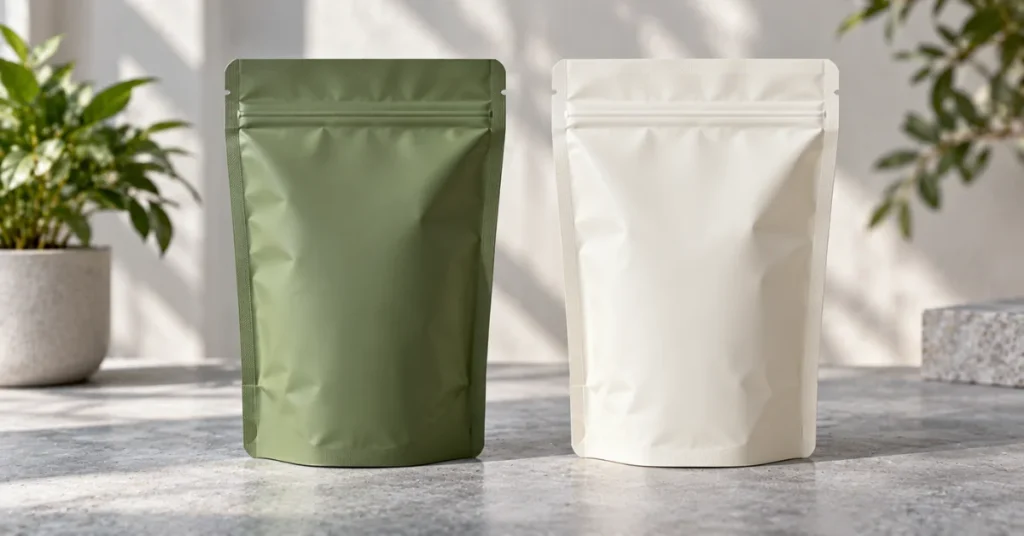
Bio-based and compostable polymers represent another major technical leap for sustainable plastic packaging. These advanced flexible films utilize renewable plant starches, polyhydroxyalkanoates, and polylactic acid to match the oxygen barrier performance and heat-sealing strength of traditional petroleum polybags. When clear barrier films are engineered to break down completely in industrial composting facilities, food and garment brands can preserve fresh shelf stability without contributing to permanent microplastic pollution.
The barrier functionality of sustainable plastic packaging remains vital for sensitive goods like organic coffee, medical supplies, and personal care liquids. Early green films often allowed moisture vapor and ambient oxygen to seep through, causing food items to spoil prematurely on store shelves. Modern bio-polymer films incorporate vacuum-deposited aluminum oxide barriers or water-based barrier coatings that provide absolute hermetic seals while retaining full certification for municipal composting facilities.
Primary Types of Commercial Eco Friendly Packaging Solutions

Industrial packaging facilities utilize several core material categories to balance environmental performance with physical shipping durability:
- Mono-material polyethylene pouches deliver complete curbside sorting compatibility while providing the grease and moisture resistance required for shelf-stable food goods.
- Certified post-consumer corrugated containers eliminate virgin tree harvesting by utilizing recycled wood fibers pressed with biodegradable water-based starches.
- Compostable bio-polymer flexible films decompose into natural organic matter within certified commercial composting systems without leaving behind toxic microplastic particles.
- Sugarcane bagasse and molded agricultural pulp trays repurpose agricultural processing waste into rigid cushioning that completely replaces molded polystyrene foam inserts.
- Recycled kraft paper mailers with water-activated adhesives create lightweight protective barriers for soft goods that reduce total freight weight and lower shipping emissions.
- Solid Bleached Sulfate folding cartons provide an ultra-bright white printable surface derived from responsibly managed timber forests for pharmaceutical and cosmetic packaging.
- Coated Recycled Board containers turn post-consumer newspaper and packaging waste into sturdy cereal boxes and household goods packaging that divert municipal landfill waste.
- Uncoated Unbleached Kraft cartons provide the maximum tensile strength and tear resistance required for heavy industrial hardware and automated conveyor shipping lines.
Selecting among these eco friendly packaging solutions depends entirely on the chemical protection your product requires. A shelf-stable liquid detergent demands high moisture barrier resistance, while dry apparel requires simple, lightweight dust barriers.
Technical Paperboard Grades and Structural Material Selection
Choosing the proper paperboard grade is a core requirement for building functional recyclable packaging solutions. Paperboard is not a generic brown material; it is manufactured under tight structural tolerances that dictate folding score cleanliness, ink holdout, and crush resistance. Solid Bleached Sulfate remains the premier virgin fiber board, featuring a smooth clay coating that allows luxury beauty and medical brands to achieve crisp offset printing while maintaining paper pulping compatibility.
When strength under humid conditions is required, Solid Unbleached Sulfate outperforms alternative paper options. Made primarily from unbleached virgin pulp fibers, this grade provides exceptional wet strength and tear resistance, making it the industry standard for chilled beverage carriers, heavy laundry detergent containers, and hardware parts. The natural pine fibers provide long-chain structural reinforcement that keeps cartons rigid even when exposed to condensation inside refrigerated transit trucks.
For dry retail products, Coated Recycled Board delivers an exceptionally cost-effective option for recyclable packaging solutions. Manufactured using one hundred percent recycled waste paper, this board features a clean white top liner suitable for flexographic printing paired with a natural grey interior back. While its bending stiffness is slightly lower than virgin kraft, using it for dry foods, shoe boxes, and household games diverts significant volumes of scrap paper away from incinerators and keeps clean post-consumer fibers circulating through commercial manufacturing loops.
Sustainable Inks Coatings and Repulping Compatibility
A box cannot be classified among genuine recyclable packaging solutions if its surface finishes prevent the underlying fibers from breaking down in a standard water-based pulping vat. Traditional commercial printing relies on petroleum-derived solvent inks and heavy ultraviolet curable varnishes that form an impermeable plastic skin across the paperboard. When these coated boards arrive at recycling mills, the synthetic plastic coating clogs screen filters and turns entire pulp vats into unusable sludge.
Sustainable manufacturing requires replacing chemical varnishes with vegetable-oil inks and water-based coatings. Inks formulated from renewable soy, linseed, and canola oils provide dense pigment saturation without releasing volatile organic compounds into the pressroom atmosphere. During post-consumer paper recycling, these plant-based pigments detach cleanly from the cellulose fibers through standard alkaline de-inking processes, leaving behind pure white wood pulp suitable for manufacturing new food-grade cartons.
Metallic and plastic decorative laminates also present hidden recycling hazards. Hot foil stamping and polyester film lamination trap paper fibers beneath persistent plastic sheets that fail repulping screens. Forward-thinking converters now employ transfer-metallized paperboard, which deposits an atomized microscopic aluminum layer directly onto a water-soluble primer. This allows consumer packages to deliver high-end metallic reflectivity while passing repulping tests alongside standard uncoated paper.
Dimensional Weight Reduction and Freight Optimization
Evaluating sustainable packaging requires analyzing total freight emissions, cargo space utilization, and warehouse volume. Oversized corrugated boxes force logistics carriers to transport empty air, driving up total truck fuel burn and demanding massive quantities of plastic air pillow void fill. Designing custom-fit structural packaging cuts raw material costs and maximizes the volumetric packing density of shipping pallets.

Dimensional weight pricing models used by international shipping carriers penalize companies for excessive container dimensions regardless of actual package mass. By transitioning from bulky standardized boxes to form-fitting kraft mailers or right-sized cartons, businesses slash their dimensional weight fees while eliminating the need for interior plastic stuffing. Every cubic inch saved across high-volume distribution lines translates directly into fewer diesel trucks on transit highways and fewer tons of greenhouse gas emissions released into the atmosphere.
Consumer Waste Perception and Supply Chain Reality
Modern shoppers show strong interest in environmental issues, but consumer recycling confusion frequently leads to contamination at local waste centers. Clear instructional labeling, like the How2Recycle system, takes the guesswork out of sorting by clearly stating whether an inner bag, outer box, or tear-away window belongs in curbside recycling or dedicated drop-off bins. Transparent labeling builds brand credibility and prevents well-intentioned customers from accidentally ruining whole batches of clean recyclables.
Brands must back up their environmental marketing claims with third-party technical certifications. Vague phrases like earth-friendly or naturally derived no longer satisfy modern regulatory boards or conscious consumers. Verified certifications from the Forest Stewardship Council, ASTM International, and independent composting institutes show that your packaging choices meet rigorous engineering standards. Authentic circularity combines honest material sourcing with realistic post-consumer recovery paths.